When You Hear Hoofbeats, Think Horses, Not Zebras
Dr. Pol has seen a thing or two during his career, but when faced with a problem, he doesn’t start by looking for the most complicated explanation. Instead, he takes a practical approach, using all five senses and a healthy dose of common sense to figure out what’s really going on – because when you hear hoofbeats, you should think of horses.
Grab a cup of coffee, pull up a chair, and let’s talk animals,
One of the first things you learn in medicine is an old saying:
“When you hear hoofbeats, think horses, not zebras.”
After more than fifty years of practicing veterinary medicine, I can tell you it’s true. Most of the time, the most likely answer really is the right one.
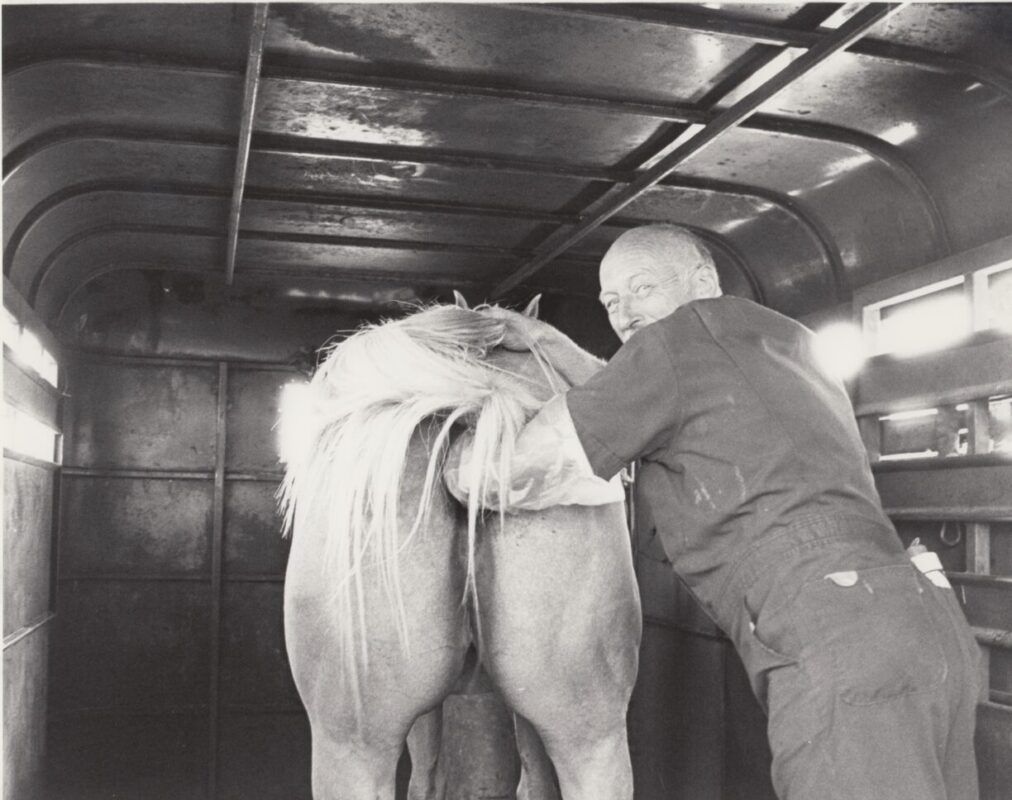
Now, don’t get me wrong. Every once in a while, a zebra really does walk through the door. One case that never made it onto television involved an Amish farmer with a horse we thought was a cryptorchid. That means one testicle never descended into the scrotum and stayed up in the abdomen.
We ran hormone tests twice. Both came back inconclusive. So, Charles and I went out to the farm to perform the surgery.
I spent quite a while with my arm inside that horse trying to find the missing testicle. Finally, I felt something…but it wasn’t what I expected. It wasn’t a testicle at all. When we removed it with the emasculator (a tool that crushes and cuts at the same time), I almost couldn’t believe what I was looking at.
It was a uterus.
A uterus…inside what appeared to be a gelding.
That horse was a true hermaphrodite. In more than fifty years of practice, that’s the only one I’ve ever seen. In fact, I still have that uterus floating around in a jar in my collection.
But cases like that come along once in a lifetime. Most of the time, the problem isn’t something mysterious. It’s something common that needs to be recognized and treated correctly.
Today, if your dog limps, scratches, vomits, or has diarrhea, you can search the internet and within five minutes convince yourself they have a disease so rare that most veterinarians will never see a single case.
I understand why people do it. We all love our animals, and when they’re sick it’s natural to worry.
The problem is that the internet doesn’t know your pet the way your veterinarian does.
It doesn’t know whether your dog got sick after getting into the garbage yesterday or if your cat has a history of hairballs. It doesn’t know your Labrador spent the afternoon swimming in the pond or your puppy just switched to a new food.
When owners come into the clinic, I always listen carefully to what they’re telling me.
But I listen even more carefully to what the animal is telling me.
I use all five senses.
Yes…
Even taste.
But that’s dead last, trust me.
I put my hands on the animal. I listen to the heart, the lungs and the stomach. Watch how they move. Look at their eyes, their skin, their posture. Sometimes I smell their breath. Sometimes I smell the back end.
You’d be surprised how much information your nose can give you.
I always think about what’s most likely before I start chasing what’s merely possible. That’s not because I’m ignoring rare diseases. It’s because good medicine starts with probability.
If ten dogs come into my clinic with itchy skin, odds are I’m going to find allergies, fleas, skin infections, or environmental irritation long before I find a disease that’s been reported only a handful of times in veterinary journals.
If a cow isn’t eating, I’m going to check for the common causes first.
When a horse is lame, I’m going to look at the foot before I assume there’s a neurological disorder.
That’s not being simplistic. That’s just being practical.
If your tractor won’t start, you don’t tear the engine apart first. You make sure it has fuel. Then you check the battery. You look for the things that fail every day… before chasing the things that fail once in a million miles.
Medicine works the same way.
Animals deserve the same common-sense approach.
Of course, there are times when the obvious answer isn’t the correct one. That’s why experience matters. My examination usually gives me a pretty good idea of what’s wrong. Then I run tests to see if the results fit what I’m thinking. If the results don’t fit, I don’t force them to fit.
I go back. I examine the animal again. I’ll ask more questions. Maybe I run different tests.
Then I treat the problem that best fits everything I’ve found, and I watch carefully to see how the animal responds. Medicine isn’t about proving you’re right. It’s about finding the right answer.
If it doesn’t, that’s when you start looking for zebras. But you don’t start there.
In more than fifty years of veterinary medicine, I’ve seen a few zebras and found things that shouldn’t exist. I’ve been surprised more than once. But those moments are memorable precisely because they’re so uncommon. Most of the time, the answer isn’t the rare disease. It’s the common one that was recognized correctly. That’s why good veterinarians don’t start with the rarest disease in the textbook.
They start with experience. Careful examination. Common sense.
Because most of the time…
When you hear hoofbeats, you’re hearing horses.
We’ll see ya.
-Dr. Pol